
CAIML Symposium 2026
The 5th CAIML Symposium will bring together leading experts and enthusiasts in AI to discover the future of the field.
May 11th 2026
- All day event.
- TU Wien, Campus Getreidemarkt Konferenzsaal TUtheSky
-
1060 Vienna, Getreidemarkt 9
Bauteil BA (Hoftrakt), 11. Stock, Raum BA11B09
On This Page
We are pleased to announce the 5th CAIML Symposium on May 11, 2026. Following the success of our previous symposiums, CAIML Symposium 2022, CAIML Symposium 2023, CAIML Symposium 2024, CAIML Symposium 2025, this symposium brings together leading experts in research and practice as well as enthusiasts in the field of Artificial Intelligence and Machine Learning to discuss the latest advancements, challenges, and opportunities. This year’s event introduces a new format designed to strengthen the dialogue between academic research and industry practice.
For the event highlights, slides, photos, and videos, visit Highlights from the CAIML Symposium 2026.
The Program at a Glance
Bridging Research and Practice
This year, the symposium brings together researchers and practitioners to discuss shared challenges, exchange knowledge, and explore collaboration opportunities. Through a combination of keynote presentations, interactive breakout sessions, and the iCAIML Doctoral College poster session, participants from academia and industry will work together on current AI challenges.
Two Focus Topics
Morning Session (09:00-12:30): AI in Coding & Agentic AI
Explore how AI is transforming software development - from intelligent code completion and automated debugging to agentic systems that autonomously plan and implement solutions. The session combines a visionary keynote with interactive breakout discussions, offering insights into current capabilities, limitations, and emerging trends in AI-assisted programming and Agentic AI systems in other application domains.
Afternoon Session (14:00-17:30): AI for Optimization & Prediction
Discover recent breakthroughs in AI-powered optimization and predictive modeling, and learn how these techniques can be used in real-world decision-making scenarios across industries. The session features a keynote on state-of-the-art solver technology, highlighting advances in hybrid CP-SAT approaches that combine constraint programming, SAT solving, and MIP techniques to tackle complex scheduling and resource allocation problems. Through interactive breakout discussions, participants have the opportunity to discuss current challenges, application scenarios, and opportunities for collaboration between academia and industry.
This event is organized with financial support from the Vienna Economic Chamber (Wirtschaftskammer Wien).
Program
8:30 - 9:00 Registration and Morning Coffee
Morning session: AI in Coding & Agentic AI
9:00 - 9:15 Welcome Addresses
Jens Schneider, Rector TU Wien
Gerti Kappel, Dean Faculty of Informatics
Nysret Musliu, Co-Director CAIML
9:15 - 10:15 Invited Keynote Talk: "AI-assisted Programming: From Intelligent Code Completion to Foundation Models. A Twenty-Year Journey." Mira Mezini, Professor of Computer Science at TU Darmstadt leading the Software Technology Lab, co-director of hessian.AI - The Hessian Center for Artificial Intelligence, co-founder of queryella.de.
10:15 - 10:35 Coffee Break
10:35 - 12:30 Interactive Breakout Sessions: Practical challenges: AI in Coding & Agentic AI
-
Impulse Pitches by TU Wien researchers and industry representatives:
Jürgen Cito, TU Wien
Alexander Czech, co-founder and CTO AI Baseline
Eleonora Laurenza, TU Wien -
Thematic Group Discussions (4–5 parallel groups)
Participants will join a moderated breakout group aligned with their interests. Building on the pitched and pre-submitted challenges, each group will dive deeper into concrete problems, share experiences, discuss possible AI-based approaches, and explore collaboration opportunities.Group moderators: Jürgen Cito (TU Wien), Peter Knees (TU Wien), Eleonora Laurenza (TU Wien), Bayar Menzat (TU Wien).
12:25 - 12:30 Opening of the iCAIML Doctoral College Poster Session: Stefan Woltran
12:30 - 14:00 Lunch Break & Networking
iCAIML Doctoral College Poster Presentations
Afternoon Session: AI for Optimization & Prediction
14:00 - 15:00 Invited Keynote Talk: "The CP-SAT Solver." Laurent Perron, tech-lead, operations research team at Google; creator of OR-Tools CP-SAT solver
15:00 - 15:30 Coffee Break
15:30 - 17:30 Interactive Breakout Sessions: Practical challenges: AI for Optimization & Prediction
-
Impulse Pitches by TU Wien researchers:
Peter Filzmoser
Allan Hanbury
Günther Raidl -
Thematic Group Discussions (4–5 parallel groups)
Participants will join a moderated breakout group aligned with their interests. Building on the pitched and pre-submitted challenges, each group will dive deeper into concrete problems, share experiences, discuss possible AI-based approaches, and explore collaboration opportunities.Group moderators: Stefan Biffl (TU Wien), Peter Filzmoser (TU Wien), Allan Hanbury (TU Wien), Günther Raidl (TU Wien), Felix Winter (TU Wien).
17:30-17:35 Closing
Who Should Attend?
- Researchers in the field of AI and ML
- Industry professionals seeking to integrate AI into their operations
- Data scientists, engineers, and decision-makers working with AI
- Anyone interested in the practical application of cutting-edge AI research
Stay Connected With Us
If you would like to stay informed about future editions of the symposium and similar events, you are warmly invited to subscribe to our CAIML newsletter. We look forward to keeping you updated on upcoming activities and opportunities to engage with our community.
Talks
AI-assisted Programming: From Intelligent Code Completion to Foundation Models. A Twenty-Year Journey
by Mira Mezini
From pioneering work on intelligent code completion to large language models, AI has have significant impact on software engineering over the past two decades. This talk traces the evolution of AI-assisted programming, highlighting advancements and outlining future directions. First, we’ll journey back to 2000-2010, briefly exploring pioneering applications of machine learning methods to coding tasks, in particular, the groundbreaking work from my lab on intelligent code completion, which was honored with the ACM SIGSOFT Impact Paper Award in 2024, showcasing the software engineering community’s early contributions.
The second part of the talk examines the current landscape dominated by modern large language models (LLMs). Primarily driven by the ML community, these tools are being rapidly adapted by the software engineering community for various tasks. This part of the talk will highlight the pressing need for designing more reliable and specialized foundation models for software engineering tasks. Subsequently, I’ll present ongoing work from our lab focused on developing more robust foundation models for coding with the specific needs of software engineering in mind. This retrospective not only celebrates past achievements but also critically examines the present landscape, emphasizing the vital role of software engineering expertise in shaping the future of AI-assisted programming.
The CP-SAT Solver
The CP-SAT solver is developed by the Operations Research team at Google and is part of the OR-Tools open-source optimization suite. It is an implementation of a purely integral Constraint Programming solver on top of a SAT solver using Lazy Clause Generation. It draws its inspiration from the chuffed solver, and from the CP 2013 plenary by Peter Stuckey on Lazy Clause Generation.
The CP-SAT solver improves upon the chuffed solver in two main directions. First, it uses a simplex alongside the SAT engine. Second, it implements and relies upon a portfolio of diverse workers for its search part.
The use of the simplex brings the obvious advantages of a linear relaxation on the linear part of the full model. It also started the integration of MIP technology into CP-SAT. This is a huge endeavour, as MIP solvers are mature and complex. It includes presolve – which was already a part of CP-SAT –, dual reductions, specific branching rules, cuts, reduced cost fixing, and more advanced techniques. It also allows the tight integration of the research from the Scheduling on MIP community along with the most advanced scheduling algorithms. This has enabled breakthroughs in solving and proving hard scheduling instances of the Job-Shop problems and Resource Constraint Project Scheduling Problems.
Using a portfolio of different workers makes it easier to try new ideas and to incorporate orthogonal techniques with little complication, except controlling the explosion of potential workers. These workers can be categorized along multiple criteria like finding primal solutions – either using complete solvers, Local Search or Large Neighborhood Search –, improving dual bounds, trying to reduce the problem with the help of continuous probing. This diversity of behaviors has increased the robustness of the solver, while the continuous sharing of information between workers has produced massive speedups when running multiple workers in parallel.
All in all, CP-SAT is a state-of-the-art solver, with unsurpassed performance in the Constraint Programming community, breakthrough results on Scheduling benchmarks (with the closure of many open problems), and competitive results with the best MIP solvers (on purely integral problems).
Speakers
Mira Mezini
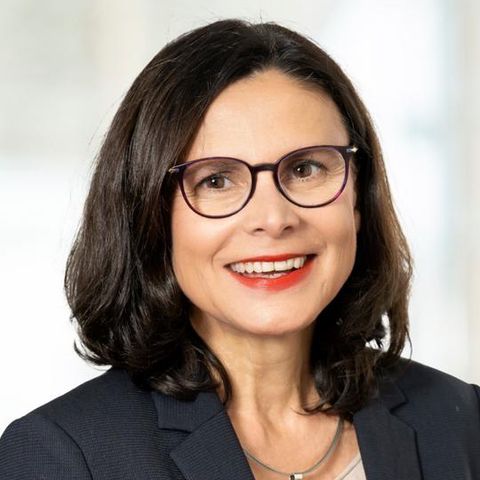
Mira Mezini is a LOEWE Distinguished Professor of Computer Science at TU Darmstadt, where she leads the Software Technology Lab. She served as TU Darmstadt’s provost for research and innovation (2014–2019), is a member of the executive board of the National Research Center for Applied Cybersecurity ATHENE, and founding co-director of the Hessian Center for Artificial Intelligence hessian.AI.
Mezini has served on the DFG Computer Science Panel, the ERC Consolidator Grant Panel, the ACM SIGPLAN Executive Committee, and the ERC Scientific Council’s selection committee. Since 2023, she is a member of the Senate of the German Research Foundation.
Her research spans programming systems for reliable distributed software and AI, automated software analysis, and AI-assisted software development. With over 200 frequently cited publications in top software engineering and programming languages venues, she has served as program chair for ECOOP, OOPSLA, FSE, and ICSE. In 2012, she received an ERC Advanced Grant. Mezini is a member of acatech (since 2016), the Albanian Academy of Sciences (since 2023), Academia Europaea (since 2024), and Leopoldina (since 2025). She was named an ACM Fellow in 2025 and is the 2025 recipient of the senior Dahl-Nygaard Prize, recognised as one of the most prestigious prizes in the area of software engineering.
Laurent Perron
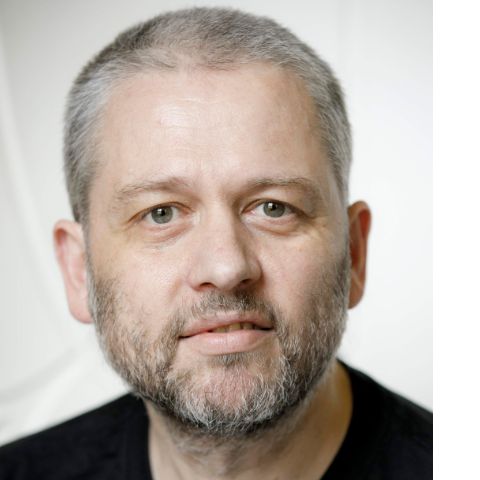
After a PhD on Parallelism in Constraint Programming, Laurent Perron joined ILOG in 1997 to work on ILOG Solver and to create ILOG CP Optimizer. In 2008, he joined Google and founded the Operations Research team.
Laurent Perron is the creator and owner of the OR-Tools open source suite of solvers. He currently works on the CP-SAT solver. He tirelessly strives to push the boundaries of what it can solve, and is always looking for new applications.